Posts

Queer masculinities

Image
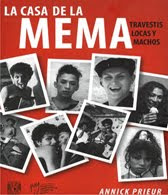
Prieur, Annick. Mema's house, Mexico City: on transvestites, queens, and machos. Chicago: University of Chicago Press, 1998. Prieur's book is based on rich ethnographic evidence and contains her reflections on the role of homosocial and homoerotic male desire in the construction of masculinities in Mexico. She argues that homophobia, machismo and male bisexuality are all at the same time imbricated in the construction of masculinities: Prieur shows the concrete ways that masculinities are constituted in the stories of 'mayates', men whose bisexual practices do not make them think of their identities as "gays" or less masculine. Since these men can retain the power of labeling others (as homosexuals) they can get involved in bisexual relations without 'losing' their masculinity. Some authors (Carrier, Lancaster) have indicated that given the extension of male bisexuality it ought to be a largely tolerated practice in Latin America. Prieur introduces mor...

Queering development in Latin America

Lind, Amy and Jessica Share. “Queering Development: Institutionalized Heterosexuality in Development Theory, Practice and Politics in Latin America”. Feminist futures : re-imagining women, culture and development edited by Kum-Kum Bhavnani, John Foran and Priya A. Kurian. London ; New York : Zed Books ; New York : Palgrave, 2003. This article argues for the need to challenge institutionalized heterosexism in development theories and practice. Along with this, addresses the uneasy relationship between heterosexual and queer feminists in Latin America, and the role of transnational networks of solidarity and activism, as well as globalized consumer culture in making some discourses of "gay rights" available in LA. Lind and Share analyze the dynamics of development "aid" and policies, most of which peaked in the 80's in the context of the AIDS pandemic. This allowed many gay groups to become "ONGized" and get funding for their activities. The groups stru...

Studies on male homosexuality in Latin America

Nesvig, Martin. 2001 “The Complicated Terrain of Latin American Homosexuality”. Hispanic American Historical Review 81(3-4): 689-729. Nesvig argues that it is relevant to look at the sexual mores of the colonial period as many of these notions persisted into the modern period in Latin America. He notes that homosexuality was considered the ultimate sin against Nature, God, and the Crown. However, this did not stop the fact that it was a fairly common and semi- institutionalized practice. Because cities offered more opportunity for anonymity and for the development of a clandestine subculture with its own slang and codes it was rather an urban phenomenon. Reviews historiographies of homosexuality, informed by the paradigm of honor/shame, where sexuality is a key component. The metaphor of penetration is contained in the myth of La Malinche, makes being penetrated something that equates being colonized, degraded and defeated. Nesvig argues that scholarship on male homosexuality have been...

Lesbian, gay and queer scholarship in Latin America

Lopez-Vicuña, Ignacio. “Approaches to Sexuality in Latin America: Recent Scholarship on Gay and Lesbian Studies”. Latin American Research Review - Volume 39, Number 1, 2004, pp. 238-253 . University of Texas Press. This article reviews scholarship on gay and lesbian studies in Latin America. The growing body of research has been more marked by diversity and complexity than by confluence. Literary studies have started to "queer" the canon by reading texts through queer desire. Queer studies from the social sciences, have tended more to build bridges between homoerotic desire and narratives of nationhood, between discourses of national identity and sexuality. They pay attention to the interplay of power, desire and race, including the analysis of the construction of whiteness and masculinity in Vargas Llosa's work. The fact that many of the writers of the Latin American literary "boom" (1960's and 70's) rejected dominant masculinity and machismo does not m...

Los estudios historiográficos de género en Latinoamérica

Caulfield S. “The History of Gender in the Historiography of Latin America”. Hispanic American Historical Review, 2001 - Duke Univ Press. Pp. 449-490. Caulfield hace un intento por revisar lo que se ha escrito sobre género en Latino América. A partir de los años 80s comienza una serie de estudios inagurados por Asunción Lavrin que usan género como categoría central de análisis. Nota la falta de diálogo entre lo que se produce en el Norte y en el Sur sobre LA. Examina la historia de las corrientes políticas y académicas que han influenciado los análisis de género en la historiografía de LA (452). El peak de los estudios de género se producen en el contexto de las postdictaduras cuando hay recursos institucionales y respaldo internacional para una agenda global “de género”. La influencia del post-estructuralismo francés resulta en un énfasis en los discursos y las representaciones, las mentalidades, y de los estudios de la mujer se transita a los estudios sobre la feminidad y la mascul...

Garretón y su Incomplete Democratization

Image
Garretón, Manuel A. Incomplete democracy: political democratization in Chile and Latin America. Chapel Hill: University of North Carolina Press, 2003. En este libro, Garretón sostiene que Chile comenzó su transición durante el plesbicito de 1988, que la democracia se consolidó con el primer gobierno democrático en 1990 (cuando se estableció que no se podía regresar a la dictadura militar) y que el problema es que la democracia chilena es hoy una democracia incompleta, mediocre, con enclaves autoritarios. Cuestiona la idea de la exitosa "doble transición chilena" —a la democracia y al libre mercado— pero se enoja con Moulian y con otros intelectuales de izquierda que niegan que haya habido transición democrática o alternativamente, que ésta haya terminado. Garretón cree que esto último negaría lo específico del concepto de transición y le quitaría sentido a su uso. Para Garretón el desafío es volver a reconstituir al Estado, los actores sociales y los partidos políticos como r...

La transición que no transita

Image
Thayer, Willy. La crisis no moderna de la universidad moderna (Epílogo del conflicto de las facultades). Santiago: Editorial Cuarto Propio, 1996. El argumento central de Thayer, en lo que concierne a mi tema, es que la transición es lo que ocurrió durante la dictadura, el tránsito desde el Estado moderno a la sociedad de mercado, donde el Estado deja de ser un referente de conducción ideológica del proyecto nacional. Este tránsito hace caer en crisis las categorías modernas de la política (Estado, Pueblo, progreso, etc.) que le servían de referente. El estado de ánimo de aburrimiento que acompaña la post-dictadura tiene que ver entonces con el fin de la épica y la proliferación inocua de las ideologías, ya no como confrontación de proyectos históricos, sino como un consumo cosmético dentro del menú neoliberal. El capitalismo tardío entonces, no requiere de una ideología ni de un orden político en particular.